
Introduction
If you own a rental property across Paraparaumu, Waikanae, Otaki or Levin, you'll likely already know the headline facts about the Healthy Homes Standards - fixed heaters, insulation, ventilation. What catches a surprising number of landlords out is the standard that sits quietly underneath all of it: moisture ingress and drainage. It's easy to assume this one is "just guttering," and therefore not worth much thought. In practice, it's one of the more commonly failed standards during inspections, and it sits squarely in plumbing and drainlaying territory. This guide walks Kapiti and Horowhenua landlords through exactly what the standard requires, what a compliance check actually looks for, what it costs to put right, and how to get ahead of it before your next tenancy renewal.
Key Takeaways
- All private rental properties in New Zealand have been required to comply with the Healthy Homes Standards since 1 July 2025
- The moisture ingress and drainage standard requires efficient drainage of stormwater, surface water and ground water, functioning gutters and downpipes, and (where applicable) a ground moisture barrier
- Non-compliance risks exemplary damages through the Tenancy Tribunal, with penalties that can run into the thousands per breach
- A targeted MBIE inspection of Auckland boarding houses in April 2026 found a 93% failure rate against the Healthy Homes Standards
- Restricted plumbing and drainlaying work to bring a property into compliance must be carried out by a licensed plumber or drainlayer
- Every new or renewed tenancy agreement must include a signed compliance statement
- A pre-tenancy inspection from a licensed plumber is one of the most cost-effective ways to catch issues before they become a Tenancy Tribunal problem
- Common failure points on older Kapiti Coast and Horowhenua rentals include cracked or misaligned downpipes, gutters discharging against the foundation, and degraded ground moisture barriers under suspended timber floors
What the Moisture Ingress & Drainage Standard Actually Requires
The Healthy Homes Standards cover five areas: heating, insulation, ventilation, moisture ingress and drainage, and draught stopping. The drainage standard is the one most directly tied to plumbing and roofing work, and it breaks down into two parts.
Drainage & Guttering
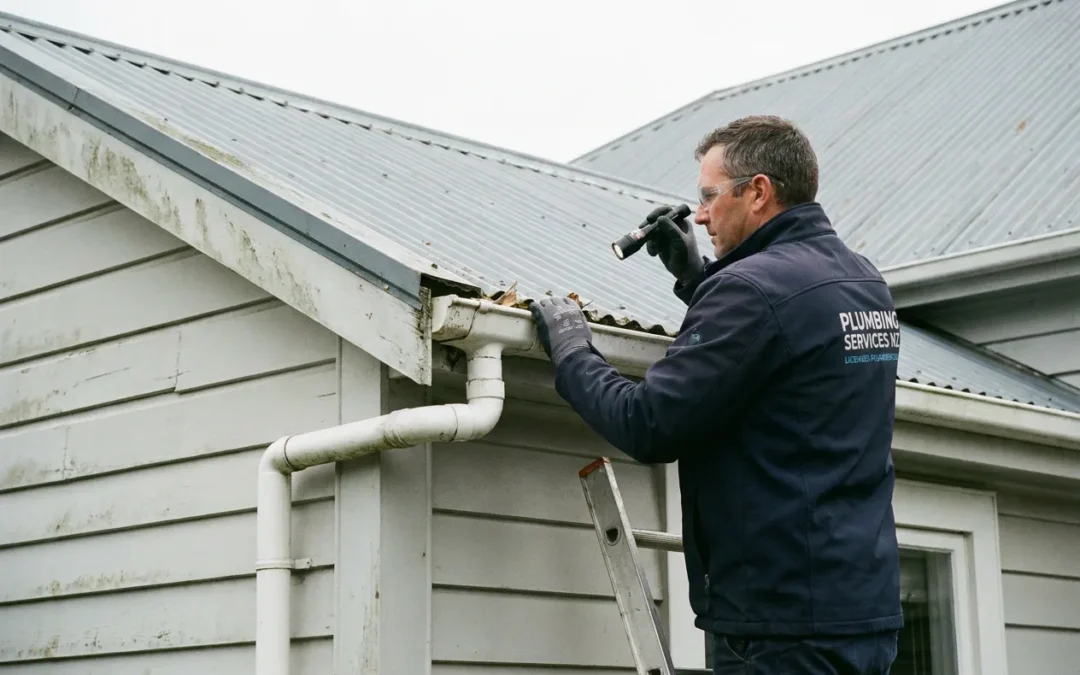
A rental property must efficiently drain stormwater, surface water and ground water to an appropriate outfall, and must have gutters, downpipes and drains adequate to remove water from the roof. In practice, this means the guttering has to actually be doing its job - not sagging, not overflowing, not disconnected from the downpipe, and not directing water to pool against the foundation instead of away from it.
The Ground Moisture Barrier
Where a rental property has an enclosed subfloor space (a suspended timber floor with limited airflow underneath), a ground moisture barrier is required if it's possible to install one. This is typically a polythene sheet meeting New Zealand Standard NZS 4246:2016, properly lapped and secured, or an equivalent professionally installed vapour barrier. Older barriers can degrade, tear, or shift out of position over time, so an existing one isn't automatically a tick - it needs to still be doing its job.
Why This Standard Catches So Many Landlords Out
Heating and insulation get most of the attention because they're the most visible, and often the most expensive, standards to meet. Drainage and guttering, by contrast, is easy to overlook because it can look fine from a casual glance at ground level, especially in dry weather. The functionality of a gutter or downpipe system is genuinely difficult to assess without watching it in moderate rain, or getting up on a ladder for a proper look.
It's a genuine, ongoing problem nationally. A targeted MBIE inspection of boarding houses across south and central Auckland in April 2026, carried out alongside Fire and Emergency New Zealand and Auckland Council, found that 14 of 15 properties inspected failed to meet the Healthy Homes Standards - a 93% failure rate, with damaged guttering flagged among the structural defects identified.
Kapiti Coast and Horowhenua add a couple of local wrinkles. A lot of the rental stock here is older villa and bungalow-style housing, with the ventilated subfloors that go with that era - exactly the construction type where the moisture barrier requirement applies, and exactly the type where it's most often missing or degraded. Add in the coastal weather cycle of salt air, wind and heavy winter rain, and guttering systems here tend to show wear faster than they would inland.
What a Compliance Inspection Actually Checks
For the drainage and guttering standard specifically, a proper inspection covers:
- The physical condition of all gutters and downpipes - are they intact, correctly aligned, and free of blockages
- Whether stormwater is actually being directed to an appropriate outfall, rather than pooling around the foundation
- Whether the subfloor is enclosed, and if so, whether a compliant ground moisture barrier is in place and in good condition
- Whether any leaking or weeping pipes are present in the subfloor that would need addressing before a barrier could be properly installed
Because functionality is hard to judge in dry weather, it's worth checking guttering during or shortly after a period of moderate rain if possible, or asking your tenants whether they've noticed any overflow or pooling during wet weather.
The Cost of Getting It Wrong
Landlords who don't comply with the Healthy Homes Standards are, by definition, currently in breach - the compliance deadline for private rentals passed on 1 July 2025. That exposes you to a few different financial risks:
- Exemplary damages through the Tenancy Tribunal for non-compliance, which can run into the thousands of dollars per breach
- Missing compliance statement penalty of up to $500 per tenancy, if a new or renewed tenancy agreement doesn't include the required signed statement of compliance
- Disputes at sale or re-tenancy, since a LIM report or a diligent buyer's solicitor can surface unconsented or non-compliant work that then needs to be resolved before settlement
Fixing Non-Compliance - What's Involved & What It Costs
The good news is that most drainage and guttering non-compliance is genuinely fixable, and rarely at the scale of a full heating or insulation retrofit.
- Gutter and downpipe repair or realignment: typically a modest job for accessible, single-storey sections, with cost driven mainly by how much of the run needs replacing rather than repairing
- Full gutter/downpipe replacement: more involved, priced by the linear metre and by roof access - a two-storey villa with tricky access costs more than a single-level bungalow
- Ground moisture barrier installation: cost depends heavily on subfloor size and access - a straightforward, easily accessible subfloor is a relatively quick job, while a cramped or partially inaccessible subfloor takes longer and costs more
- Addressing weeping pipes in the subfloor first: any leaking pipework needs fixing before a moisture barrier can be properly installed over it, so this sometimes surfaces as an additional line item during inspection
Because restricted plumbing and drainlaying work must be carried out by a licensed practitioner, it's worth getting an itemised quote up front rather than guessing at scope - a five-minute visual check from ground level often misses exactly the kind of fault that fails an inspection.
Common Signs Your Property May Be at Risk
A handful of warning signs are worth walking your rental property looking for, ideally in or just after rain:
- Water visibly pooling near the foundation rather than draining away from it
- A downpipe that's disconnected, cracked, or clearly discharging in the wrong direction
- Sagging sections of gutter, or gutters overflowing during moderate rain
- A musty smell or visible dampness under an enclosed subfloor
- Tenant reports of damp patches, mould, or condensation that weren't previously an issue
None of these automatically means a fail, but any of them are worth a professional look before they become one.
A Simple Pre-Tenancy Checklist for Landlords
- Walk the full perimeter of the property and check every downpipe discharges away from the foundation, not against it
- Check gutters for visible sagging, rust, or debris build-up, ideally during or just after rain
- If there's an enclosed subfloor, get a licensed plumber to check whether a ground moisture barrier is present and in good condition
- Keep photographic records and invoices of any compliance work completed, as evidence for your compliance statement
- Build a Healthy Homes check into your standard routine at the start and end of every tenancy, not just when a complaint comes in
Why Choose Duke's Plumbing
Duke's Plumbing has been serving landlords and property managers across the Kapiti Coast and Horowhenua since 2016. Because drainage, guttering and drainlaying work of this kind is restricted work under New Zealand law, it has to be carried out by a licensed practitioner - our whole team holds current New Zealand certifications in plumbing, gasfitting and drainlaying, fully insured, with every job backed by a workmanship guarantee. We can carry out a full Healthy Homes drainage assessment, provide the documentation you need for your compliance statement, and complete any restricted work required, all in one visit where possible.
Get Ahead of Your Next Tenancy Renewal
Don't wait for a tenant complaint or a Tribunal notice to find out your guttering isn't compliant. Book a Healthy Homes drainage assessment with Duke's Plumbing today.
📞 022 543 8789 📧 admin@dukesplumbingltd.co.nz 🌐 dukesplumbingltd.co.nz
Duke's Plumbing - Quality Plumbing, Friendly Service.
Frequently Asked Questions
Do all rental properties need a ground moisture barrier? Only where the property has an enclosed subfloor space (a suspended timber floor with limited airflow underneath). If the floor sits directly on a concrete slab, or the subfloor is fully open and ventilated, the barrier requirement doesn't apply in the same way. A licensed plumber can confirm which category your property falls into.
Can I install the ground moisture barrier myself? Some barrier installation can be owner-installed, but any associated plumbing or drainlaying work - such as fixing a leaking subfloor pipe first - is restricted work and must be done by a licensed practitioner. Given the compliance stakes, most landlords choose to have the whole job done and documented professionally in one visit.
How do I know if my property is currently compliant? The only reliable way is a physical inspection, ideally by a licensed plumber who can assess drainage, guttering and subfloor condition against the standard and provide written documentation either confirming compliance or scoping the work required.
What happens if I don't fix a known issue before a tenancy renewal? You're required to include a signed compliance statement with every new or renewed tenancy agreement. Signing a statement of compliance for a property you know isn't compliant carries its own risk, separate from the underlying Tenancy Tribunal exposure for the non-compliance itself.
Is this the same standard that covers heating and insulation? No - moisture ingress and drainage is one of five separate Healthy Homes Standards, alongside heating, insulation, ventilation and draught stopping. A property can meet the heating and insulation standards perfectly and still fail on drainage.
My tenant hasn't complained about drainage - do I still need to check it? Yes. Compliance is the landlord's ongoing responsibility regardless of whether a tenant has raised a concern, and some drainage issues - like a slowly failing moisture barrier - aren't things a tenant would necessarily notice or think to report.
Sources
- Tenancy Services (MBIE) - Moisture Ingress and Drainage Standard: https://www.tenancy.govt.nz/healthy-homes/moisture-ingress-and-drainage-standard/
- Tenancy Services (MBIE) - Healthy Homes Compliance: https://www.tenancy.govt.nz/healthy-homes/healthy-homes-compliance/
- RentManager NZ - Healthy Homes Standards NZ: Complete Landlord Compliance Guide (2026): https://rentmanager.nz/blog/healthy-homes-standards-nz
- Whitehead Plumbing and Gas - Rental Property Plumbing Compliance in NZ: https://whiteheadplumbing.co.nz/rental-property-plumbing-compliance-in-nz-what-is-required-from-landlords/
Duke's Plumbing Ltd offers premium plumbing, gas fitting, and drainlaying services across the Kapiti Coast and Horowhenua region, specialising in Infinity gas hot water systems, drain laying, certified gas fitting, full plumbing services, roofing and spouting, emergency plumbing repairs, and commercial and residential projects. Established in 2016 under the leadership of Luke (Dusty), our licensed team delivers quality workmanship with our motto: "Quality Plumbing, Friendly Service."