
Introduction
Spring has a way of getting people thinking about renovations, and the bathroom is consistently one of the most popular rooms in the house to tackle - it's also one of the easiest to get expensively wrong. Unlike a kitchen refresh, a bathroom renovation touches structure, drainage, waterproofing and consent all at once, and the mistakes tend to be the kind you can't see until they've already cost you. This guide walks Kapiti Coast and Horowhenua homeowners through what actually needs consent, why waterproofing deserves more attention than it usually gets, what to budget for, and the questions worth asking before a single tile comes off the wall.
Key Takeaways
- Like-for-like fixture replacement in the same position generally doesn't require building consent, but moving fixtures, adding a wet-area tiled shower, or altering drainage usually does
- Bathroom waterproofing in New Zealand is regulated work under the wet-area membrane standard, not just best practice
- Waterproofing failures are one of the most common and expensive causes of bathroom remediation work
- Once tiles go on, the waterproof membrane underneath can never be visually verified again - it's a genuine hold point in the project
- Bathroom renovation costs in New Zealand commonly range from around $4,000 for a modest refresh to $12,000+ for a full remodel
- Building consent applications typically cost $400-$1,000, on top of the renovation itself
- Sanitary plumbing work is restricted and must be carried out by a licensed plumber, regardless of whether the project needs consent
- Planning drainage, waterproofing and fixture positions before demolition starts avoids the most expensive and common renovation mistakes
Do You Actually Need a Building Consent?
This is genuinely the question that trips up more homeowners than any other part of a bathroom renovation, because the rules are written around building systems, not rooms - which means a fairly modest-looking job can need consent while a bigger cosmetic makeover doesn't.
What's Usually Exempt
Replacing a toilet, vanity or shower unit in the same position, retiling, and swapping out tapware are generally exempt from consent, provided the number of plumbing fixtures stays the same and the pipework isn't materially altered.
What Triggers Consent
Consent is typically required for:
- Installing a fully tiled wet-area shower, because the waterproof membrane underneath is consented work
- Moving a toilet, shower, vanity or bath to a new position
- Adding a fixture that wasn't there before (for example, adding a second toilet or a new shower)
- Altering structure, such as moving or removing a wall
- Changing drainage - relocating waste outlets or altering underground or in-wall pipework
Even where consent isn't legally required, all work must still comply with the New Zealand Building Code - "exempt from consent" is not the same as "exempt from the rules."
Waterproofing - The Part You Can Never See Again Once It's Done
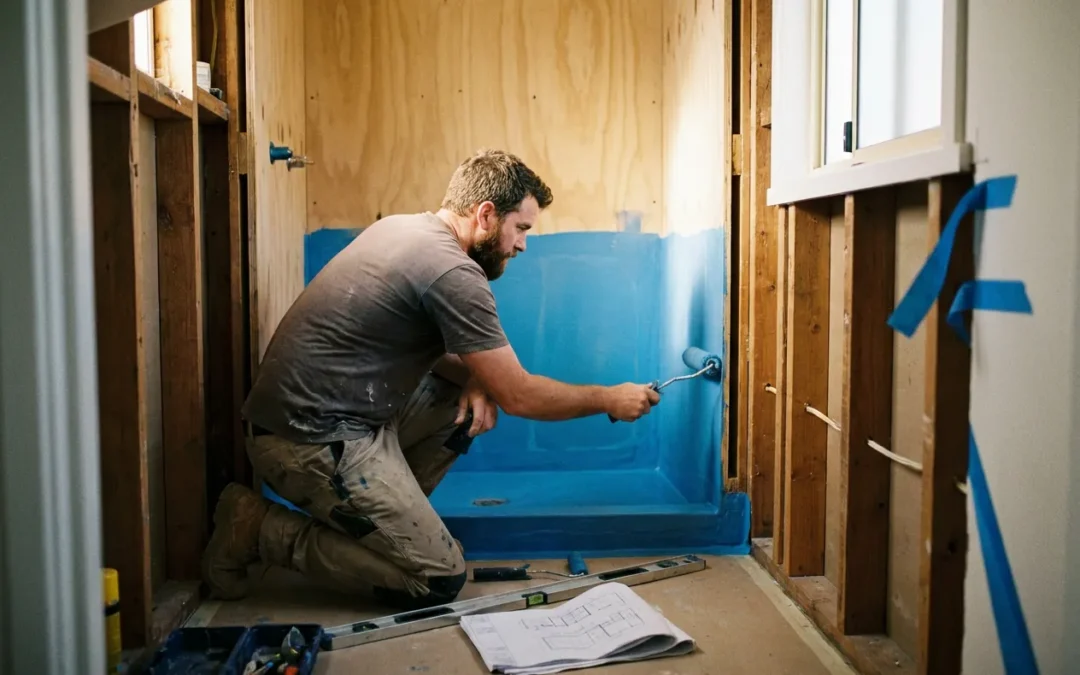
Bathroom waterproofing in New Zealand is regulated under the wet-area membrane standard and Clause E3 (Internal Moisture) of the Building Code - it has to be applied correctly to a defined specification, not simply "sealed up well" by whoever's doing the tiling. The membrane needs to extend a minimum height up the walls - generally around 100mm at floor level, rising to around 1,800mm in shower areas - correctly lapped and sealed at every junction.
Here's the part that catches people out: once tiling begins, the membrane underneath is buried for the life of the bathroom. It can't be checked again without ripping the tiles back off. That makes the moment just before tiling starts a genuine hold point in the project - the last chance to actually see the finished membrane, its falls, and its junctions, rather than simply trusting that it's there. On a consented job, this is part of what an inspector checks; on an unconsented but still-Code-compliant job, it's worth asking your plumber or waterproofer to show you (or photograph) the completed membrane before a single tile is bonded on.
Inadequate waterproofing is consistently one of the leading causes of expensive bathroom remediation work in New Zealand homes - and by the time a failure becomes visible (a stain on the ceiling below, a soft patch in the floor), the framing underneath has often been wet for months.
Common Bathroom Renovation Mistakes We See
- Assuming a job is exempt from consent without checking - and finding out at sale time, when a LIM report or a buyer's solicitor flags unconsented work
- Not confirming waterproofing scope in the quote - if a renovation quote doesn't mention waterproofing methodology, it's worth asking before signing anything
- Skipping ventilation - it's easy to overlook in a "simple" reno, but it's a common consent requirement and essential for preventing mould and dampness long-term
- Choosing fixtures before confirming drainage falls and pipe runs - a beautiful floor-mounted bath doesn't help if the waste run can't achieve the fall it needs
- Treating the plumber as an afterthought to the tiler - waterproofing, drainage and fixture positioning all need to be locked in before tiling starts, not adjusted around it
What Does a Bathroom Renovation Cost in NZ?
Every renovation is different, but as a general guide:
- A modest refresh (like-for-like fixtures, retile, new tapware, no layout changes): often starts from around $4,000-$6,000
- A mid-range renovation (some fixture repositioning, new shower, updated waterproofing): commonly runs $6,000-$10,000+
- A full remodel (new layout, new wet-area shower, full waterproofing, premium fixtures): frequently reaches $12,000 and beyond
- Building consent application, where required, typically adds a further $400-$1,000 on top of the renovation cost itself
Getting a written, itemised quote that separately identifies waterproofing methodology, plumbing scope and consent responsibility is the single best way to avoid a budget blowing out partway through.
DIY vs Professional: Where the Line Sits
It's tempting to save money by doing some of the work yourself, and some of it is genuinely fine to DIY - painting, some cabinetry installation, and cosmetic finishing touches don't require a licensed tradesperson. The line falls clearly at sanitary plumbing: any work on a toilet, shower, basin, bath or the pipework feeding them is restricted work under New Zealand law and must be carried out by a licensed plumber. This isn't just a legal formality - unauthorised plumbing work can void your home insurance, and it's one of the first things that surfaces as a problem at sale time if it wasn't done or documented correctly. A sensible split for most homeowners: DIY the parts that are genuinely cosmetic, and bring in a licensed plumber for anything involving water, drainage or gas from the start of the project, not as an afterthought once something's already gone wrong.
Planning Your Renovation Timeline
A straightforward bathroom renovation without consent requirements can often be completed within a couple of weeks once materials are on hand. Where consent is needed, factor in council processing time before work can start, plus scheduled inspections at key stages (typically drainage and waterproofing, before it's covered up). Spring and early summer are popular renovation months across Kapiti and Horowhenua, so booking your plumber and tiler well ahead of when you actually want work to start is worth doing now rather than in a rush before summer visitors arrive.
Questions to Ask Before You Start
- Does this renovation need building consent, based on what we're actually changing?
- What waterproofing system will be used, and can I see or photograph the finished membrane before tiling?
- Will the fixture positions or drainage change, and if so, has the fall and pipe run been confirmed?
- Is ventilation included, and does it meet current requirements?
- Who's responsible for the consent application and inspections, if one's needed?
Why Choose Duke's Plumbing
Duke's Plumbing has been delivering bathroom renovation plumbing across the Kapiti Coast and Horowhenua since 2016. Our team holds current New Zealand certifications in plumbing, gasfitting and drainlaying, fully insured, with every job backed by a workmanship guarantee - and because sanitary plumbing is restricted work, we make sure it's done right, documented properly, and ready for inspection if your project needs one.
Planning a Bathroom Renovation This Spring?
Get your plumbing scoped properly before you start pulling anything out. Get in touch with Duke's Plumbing for a quote today.
📞 022 543 8789 📧 admin@dukesplumbingltd.co.nz 🌐 dukesplumbingltd.co.nz
Duke's Plumbing - Quality Plumbing, Friendly Service.
Frequently Asked Questions
Do I need consent just to retile my existing bathroom? Generally no, if you're retiling in the same layout without altering the number of fixtures, drainage or structure. However, if the retiling involves a new wet-area shower membrane, that specific element is typically consented work.
How do I know if my waterproofing has been done properly? The only reliable way is to see the finished membrane - or a clear photograph of it, showing the falls and junctions - before tiling begins. Once tiles are on, it can't be verified again without removing them.
Can I do any of the plumbing myself to save money? Sanitary plumbing work is restricted under New Zealand law and must be carried out by a licensed plumber. Unauthorised work can void your insurance and create serious problems if you come to sell the property.
How long does a bathroom renovation take? A straightforward renovation without consent requirements often takes a couple of weeks once materials are ready. Consented projects take longer, due to council processing time and staged inspections.
What's the most expensive mistake homeowners make? Skipping or under-specifying waterproofing, and finding out years later when a leak has already damaged the framing underneath. It's far cheaper to get it right and verified before tiling than to fix it afterwards.
What parts of a bathroom renovation can I safely DIY? Cosmetic work like painting and some cabinetry or accessory installation is generally fine to do yourself. Anything involving the toilet, shower, basin, bath or their pipework is restricted plumbing work and must be done by a licensed plumber.
Sources
- ArchiPro / Superior Renovations - Do You Need Building Consent for a Bathroom Renovation in NZ: https://archipro.co.nz/article/do-you-need-building-consent-for-a-bathroom-renovation-in-nz-superior-renovations
- Sonder Architecture - Building Consent for Renovations: Auckland Homeowner's Guide: https://sonderarchitecture.co.nz/building-consent-for-renovations/
- Property Blueprint Co - Bathroom Waterproofing in New Zealand: A Guide: https://propertyblueprintco.com/en-us/blogs/nz/bathroom-waterproofing-nz
- Extreme Plumbing and Gas - A 2026 Guide to Plumbers Cost in New Zealand: https://www.extremeplumbing.co.nz/a-2026-guide-to-plumbers-cost-in-new-zealand/
Duke's Plumbing Ltd offers premium plumbing, gas fitting, and drainlaying services across the Kapiti Coast and Horowhenua region, specialising in Infinity gas hot water systems, drain laying, certified gas fitting, full plumbing services, roofing and spouting, emergency plumbing repairs, and commercial and residential projects. Established in 2016 under the leadership of Luke (Dusty), our licensed team delivers quality workmanship with our motto: "Quality Plumbing, Friendly Service."