
Introduction
There's a particular kind of dread that comes with waking up to the sound of water where there shouldn't be any. For homeowners across Paraparaumu, Waikanae, Otaki and Levin, the coldest weeks of winter bring exactly that risk. As temperatures drop and exposed pipework struggles to cope, burst and frozen pipes become one of the most common - and most avoidable - plumbing emergencies we're called out for each year. Whether you're in an older Kapiti Coast villa with pipework running under an open subfloor, or a lifestyle block out towards Horowhenua where the frost sits longer in the mornings, this guide walks you through why it happens, the warning signs to watch for, what to do if a pipe does burst, and - most importantly - how to stop it happening in the first place.
Key Takeaways
- Burst and frozen pipes spike during the coldest weeks of winter, particularly on properties with exposed or uninsulated pipework
- Older Kapiti Coast villas with open subfloors and rural Horowhenua properties with longer exterior pipe runs are especially vulnerable
- It isn't only freezing that causes bursts - high water pressure, ageing pipework and ground movement all play a part too
- Warning signs include reduced water flow, frost on exposed pipes, gurgling noises, and unexplained damp patches
- If a pipe bursts: shut off the water at the mains, turn off your hot water cylinder, and call an emergency plumber straight away
- Water damage from a burst pipe often costs more to put right than the plumbing repair itself
- Simple, low-cost prevention - pipe lagging, insulated outdoor taps, and knowing your mains shut-off valve - stops most winter callouts before they start
- Landlords carry extra responsibility here, since drainage and moisture ingress fall under the Healthy Homes Standards
- Duke's Plumbing offers emergency callouts across Kapiti Coast and Horowhenua, seven days a week
- Insurance usually covers sudden burst pipe damage, but not gradual, poorly-maintained leaks
- A pre-winter plumbing check is one of the cheapest ways to avoid a much larger bill later
Why Kapiti & Horowhenua Homes Are More Vulnerable Than You'd Think
It's a common misconception that frozen and burst pipes are a "cold country" problem - something that happens in the South Island high country, not on the coast. In reality, it doesn't take a hard frost to cause damage. A sharp overnight temperature drop, combined with pipework that isn't properly protected, is often all it takes.
Older Villas & Exposed Subfloor Pipework
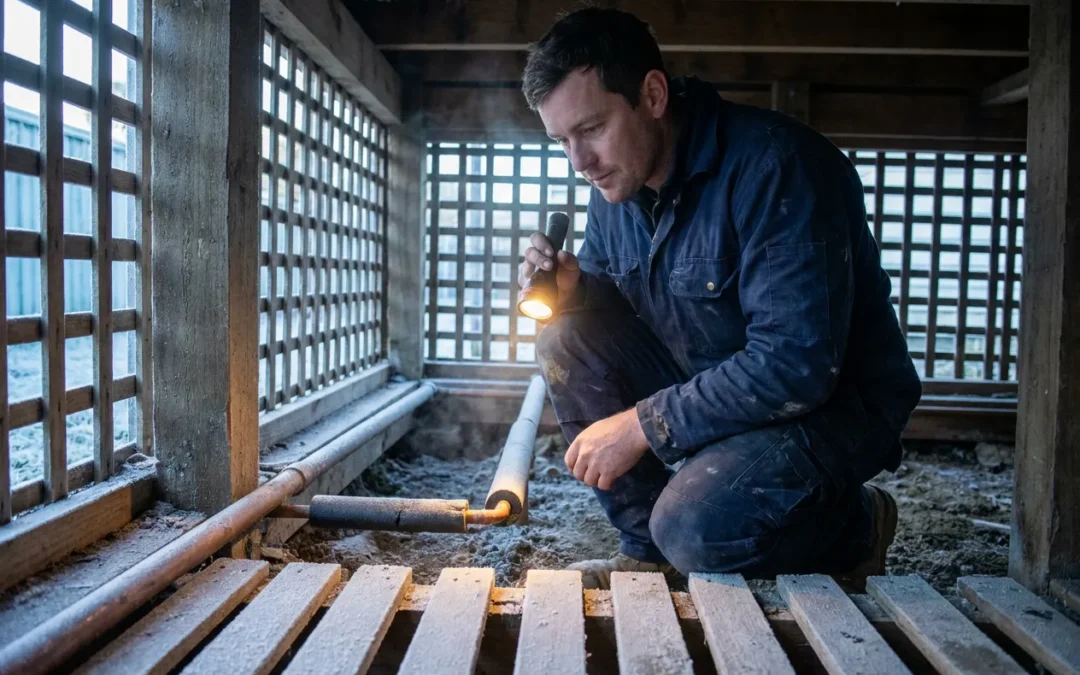
A lot of the housing stock across Paraparaumu, Waikanae and Otaki is older villa and bungalow-style construction, built with open, ventilated subfloors rather than an insulated concrete slab. That's great for keeping timber floors dry, but it also means the cold water pipes running underneath the house are directly exposed to the same air temperature as outside - sometimes colder, since there's no sun getting under there to warm things up during the day. Where those pipes haven't been lagged (insulated), they're the first thing to suffer on a cold night.
Coastal Cold Snaps vs Rural Horowhenua Frosts
The Kapiti Coast and Horowhenua don't get the same sustained sub-zero temperatures you'd see further south, but that can actually work against homeowners, because pipework often isn't insulated to the same standard as it would be in a colder region. A single sharp frost is sometimes all it takes to catch an unprotected outdoor tap or exposed length of pipe out. Rural and lifestyle properties further into Horowhenua tend to sit a degree or two colder overnight than the coast, with longer runs of exterior pipework feeding sheds, troughs and outdoor taps - all extra points of exposure.
It's Not Just the Cold: What Actually Causes Pipes to Burst?
Freezing is the headline winter risk, but it's rarely the only factor at play. A few other common culprits we see on callouts across the region:
- High water pressure - excess pressure places ongoing strain on ageing pipework, and it's often the final straw when combined with a cold snap
- Ageing or corroded pipes - older galvanised steel pipework, common in villas built before the 1970s, corrodes internally over time and becomes brittle
- Ground movement - minor shifts in the ground around underground pipework, particularly after heavy winter rain, can stress joints and connections
- A blocked drain building pressure - a clog further down the line can force water back up under pressure, weakening a pipe from the inside
Knowing your property's specific risk factors - its age, pipe material and pressure - is exactly what a pre-winter plumbing check is for.
The Warning Signs Before a Pipe Bursts
Pipes rarely burst without warning. Catching the signs early is usually the difference between a quick fix and a full emergency callout.
Reduced or No Water Flow From a Tap
If a tap that normally runs fine suddenly slows to a trickle or stops altogether, particularly first thing in the morning, it's worth treating as an early warning rather than a coincidence. Ice forming inside a pipe restricts flow before it eventually cracks the pipe wall.
Frost or Bulging on Exposed Pipework
Take a walk around the outside of the house on a cold morning and look at any exposed pipework - under the house, along an exterior wall, or feeding an outdoor tap. Visible frost, ice, or a section of pipe that looks like it's bulging is a clear sign that water inside has started to freeze.
Strange Noises From Your Pipes
Gurgling, clanking or whistling sounds when you turn on a tap can point to trapped air or ice partially blocking a pipe. It's easy to dismiss as "just an old house noise" - but combined with cold weather, it's worth a closer look.
Damp Patches, Musty Smells or Warm Spots on Floors
A pipe that's already cracked - even a hairline crack, before a full burst - can leak slowly into a wall cavity or under flooring. Watch for damp patches on walls or ceilings, a musty smell that wasn't there before, or (for underfloor heating or hot water pipes) an unusual warm patch on the floor.
A Pipe Has Burst - What To Do Right Now
If you're reading this because it's already happened, here's the order of operations.
Shut Off the Water at the Mains
Every property has a mains shut-off valve, usually near the water meter or where the supply enters the house. Turning this off stops any more water reaching the burst pipe. If you don't know where yours is, it's worth finding out today, before you need it in an emergency.
Turn Off Your Hot Water Cylinder
If the burst affects the hot water supply, switch off the cylinder at the wall to avoid it overheating with no water moving through it.
Call an Emergency Plumber
Once the water's off, the immediate danger is under control - but the damage is still spreading if there's standing water. Duke's Plumbing takes emergency callouts across Kapiti Coast and Horowhenua seven days a week, and getting a licensed plumber on-site quickly makes a real difference to the total repair bill.
Limit the Water Damage While You Wait
If it's safe to do so, mop up standing water, move furniture and belongings clear of the area, and prop up wet carpet or rugs to help airflow. Don't be tempted to patch the pipe yourself with tape - it's very unlikely to hold, and disturbing a burst pipe can sometimes make the damage worse before a professional arrives.
What Does Burst Pipe Repair Actually Cost in NZ?
Every job is different, but as a general guide for Kapiti and Horowhenua homeowners:
- Standard call-out fee: typically $60-$120 for a non-emergency visit
- Emergency/after-hours call-out: commonly $180-$350+, plus hourly labour, given the urgency and timing involved
- Hourly labour rates: generally sit between $80-$250 depending on the complexity of the job and access to the affected pipe
- A straightforward, accessible pipe repair: often falls in the low hundreds of dollars
- Water damage restoration: clean water damage (as opposed to contaminated wastewater) typically runs in the order of $50-$70 per square metre for drying and reinstatement work, separate to the plumbing repair itself
- Leak detection, where the source isn't obvious, can add several hundred dollars on its own
The single biggest factor in cost is almost always how quickly the leak is caught and the water shut off - which is exactly why acting fast on the warning signs above matters so much.
Protecting Your Plumbing Before the Next Cold Snap
The good news: most burst pipe callouts we attend each winter are preventable, and the fixes are genuinely low-cost compared to the alternative.
Insulate (Lag) Exposed Pipework
Foam pipe lagging is cheap, available from any hardware store, and takes an afternoon to fit around exposed subfloor and exterior pipework. It's one of the highest-value, lowest-cost jobs a homeowner can tick off before winter properly sets in.
Insulate Outdoor Taps & Hose Bibs
Outdoor taps are usually the first thing to freeze, simply because they're the most exposed point in the whole system. A foam tap cover, available for a few dollars, is a five-minute job that prevents a genuinely common callout.
Know Where Your Mains Shut-Off Valve Is
This costs nothing and takes two minutes - but knowing exactly where your shut-off valve is, and confirming it actually turns, before you're standing in an inch of water at 2am, is one of the most useful things you can do.
Keep a Trickle Running on the Coldest Nights
On genuinely sharp frost nights, letting a tap run at a slow trickle keeps water moving through the pipe, which makes it much harder for ice to form and build pressure.
Get Your Hot Water Cylinder Serviced Before Winter
A cylinder under strain in winter - working harder to heat colder incoming water - is more likely to develop problems at the worst possible time. A pre-winter service picks up early warning signs before they become a burst pipe or a cold shower.
Show Image
A Note for Landlords & Property Managers
If you manage a rental property in Kapiti or Horowhenua, winter pipe protection isn't just good practice - it overlaps directly with your obligations under the Healthy Homes Standards, which require efficient drainage and guttering to remove stormwater, surface water and groundwater from the property. A burst or leaking pipe that isn't addressed promptly can quickly become a compliance issue as well as a plumbing one. We've covered the wider picture of managing plumbing across a rental portfolio in our guide for property managers - worth a read if winter has you thinking about your wider maintenance schedule.
A Quick Note on Insurance
Most home and contents insurance policies cover sudden, accidental damage from a burst pipe, including the resulting water damage - but gradual damage from a long-term, unaddressed leak is often excluded, or covered on different terms. It's worth checking your specific policy, and keeping any invoices from plumbing work as evidence of reasonable maintenance if you ever need to make a claim.
Why Choose Duke's Plumbing
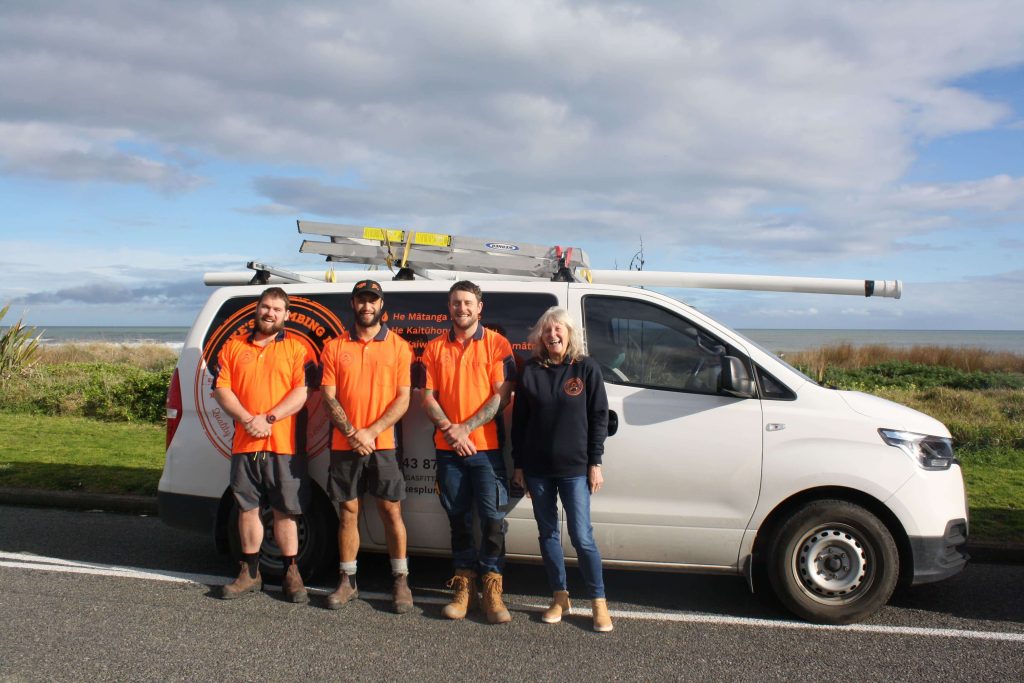
Duke's Plumbing has been looking after homes and businesses across the Kapiti Coast and Horowhenua since 2016, when Luke (Dusty) started out as a one-man band. Today, Luke leads a small, local team - Levi, Leon, Tawhiri and Jandy - all holding current New Zealand certifications in plumbing, gasfitting and drainlaying, fully insured, and every job backed by a workmanship guarantee. As a genuinely local, family-run business based in Ōtaki, we understand exactly which properties around Paraparaumu, Waikanae, Otaki and Levin are most exposed when the temperature drops, because we're the ones called out to fix it.
Facing a Winter Plumbing Emergency?
Don't wait for a small drip to become a burst pipe. If you've spotted any of the warning signs above, or you'd like a pre-winter plumbing check to head off trouble before it starts, get in touch with Duke's Plumbing today.
📞 022 543 8789 📧 admin@dukesplumbingltd.co.nz 🌐 dukesplumbingltd.co.nz
Duke's Plumbing - Quality Plumbing, Friendly Service.
Frequently Asked Questions
How do I know if my pipes have frozen? The clearest sign is reduced or no water flow from a tap that normally works fine, especially on a cold morning. You may also notice frost or a bulge on any exposed pipework, or unusual gurgling noises when you turn a tap on.
Should I try to thaw a frozen pipe myself? You can gently apply warmth (a hairdryer on a low setting, held a safe distance away, is the safest DIY option) to an accessible section of pipe. Never use an open flame, and if the pipe is hidden behind a wall, under the floor, or doesn't thaw quickly, it's time to call a plumber rather than risk making it worse.
Does Duke's Plumbing offer emergency callouts on weekends? Yes. We provide emergency plumbing response across Kapiti Coast and Horowhenua seven days a week, including weekends and after hours.
How much does it cost to have pipes professionally insulated before winter? It depends on how much exposed pipework your property has, but it's a genuinely low-cost job relative to the price of an emergency callout and water damage repair - ask us for a quote when we're on-site for any other work.
Will my insurance cover a burst pipe? In most cases, sudden accidental damage from a burst pipe is covered under standard home and contents insurance. Gradual, long-term leaks are often treated differently, so it's worth checking your specific policy and keeping records of any plumbing maintenance.
Sources
- Tenancy Services (MBIE) - Moisture Ingress and Drainage Standard: https://www.tenancy.govt.nz/healthy-homes/moisture-ingress-and-drainage-standard/
- PlumbingQuotes.co.nz - Plumbing Costs NZ 2025 Complete Pricing Guide: https://plumbingquotes.co.nz/blog/plumbing-costs-nz/
- Extreme Plumbing and Gas - A 2026 Guide to Plumbers Cost in New Zealand: https://www.extremeplumbing.co.nz/a-2026-guide-to-plumbers-cost-in-new-zealand/
- Add Value Restoration - How Much Does Water Damage Repair Cost in NZ: https://www.addvaluerestoration.co.nz/blog-water-damage-repair-cost-nz.html
- Fox Plumbing NZ - The Importance of Proper Pipe Insulation: https://www.foxplumbing.co.nz/blog/the-importance-of-proper-pipe-insulation-and-how-it-prevents-plumbing-disasters
Duke's Plumbing Ltd offers premium plumbing, gas fitting, and drainlaying services across the Kapiti Coast and Horowhenua region, specialising in Infinity gas hot water systems, drain laying, certified gas fitting, full plumbing services, roofing and spouting, emergency plumbing repairs, and commercial and residential projects. Established in 2016 under the leadership of Luke (Dusty), our licensed team delivers quality workmanship with our motto: "Quality Plumbing, Friendly Service."