
Introduction
Your hot water cylinder works silently in the background, heating water around the clock whilst consuming substantial energy—but for many Paraparaumu homeowners, this essential appliance wastes far more money than necessary. The $40+ monthly mentioned in this article’s title isn’t exaggeration; it represents the realistic additional cost that inefficient hot water systems impose on households throughout the Kapiti Coast.
Most homeowners never question their hot water cylinder’s efficiency until complete failure forces replacement. Meanwhile, aging cylinders, poor insulation, incorrect temperature settings, and mineral buildup from Kapiti’s hard water silently drain household budgets month after month. These inefficiencies compound over time, with a cylinder wasting $50 monthly costing an extra $600 annually—money that disappears without delivering any additional comfort or convenience.
Understanding where this waste occurs and how professional assessment identifies specific inefficiencies in your system empowers informed decisions about maintenance, upgrades, or replacement. This comprehensive guide reveals the hidden costs affecting Paraparaumu hot water cylinders whilst explaining practical solutions that reduce energy consumption, lower power bills, and improve hot water system performance.
Key Takeaways
- Hot water heating represents approximately 30% of average New Zealand household energy consumption
- Inefficient cylinders can waste $40-$80 monthly through preventable energy losses
- Pre-2002 cylinders lack modern insulation standards, wasting up to 1 kilowatt-hour daily through heat loss alone
- Incorrect temperature settings waste energy whilst creating either safety risks or inadequate hot water supply
- Hard water mineral buildup reduces heating efficiency and accelerates element failure throughout Kapiti Coast
- Cylinder wrap insulation costs around $60 installed but can save $30-90 annually in reduced energy costs
- Tempering valves allow safe cylinder temperatures whilst delivering comfortable tap temperatures
- Modern cylinders achieve substantially better energy efficiency than units manufactured before current standards
- Professional assessment identifies specific inefficiencies affecting your cylinder’s performance
- Heat pump hot water systems can reduce water heating energy consumption by 60-75% compared to standard electric cylinders
- Regular professional maintenance extends cylinder lifespan whilst maintaining optimal efficiency
- Paraparaumu’s coastal environment accelerates cylinder deterioration, making professional inspection particularly valuable
Understanding Hot Water Heating Costs in New Zealand

Before examining specific inefficiencies, understanding baseline hot water heating costs provides context for the waste occurring in many Paraparaumu homes. These figures demonstrate why even modest efficiency improvements deliver substantial savings.
Hot Water’s Share of Household Energy
According to Consumer New Zealand research, hot water heating accounts for approximately 30% of average household energy consumption—the single largest energy use in most homes. For households using standard electric hot water cylinders, this represents significant ongoing costs that many homeowners underestimate when considering their energy budgets.
A typical New Zealand household uses around 150-200 litres of hot water daily, with variations based on household size, lifestyle, and appliance efficiency. Heating this volume from cold water temperature (approximately 12-15°C) to usable hot water temperature (60°C minimum for cylinder storage) requires substantial energy input daily.
Current Electricity Costs
New Zealand electricity prices vary by region and retailer, with Kapiti Coast households typically paying 25-30 cents per kilowatt-hour (kWh) for standard supply. Some households access cheaper night-rate power for hot water heating, reducing costs to 15-20 cents per kWh during off-peak hours. However, many Paraparaumu properties still operate on standard rate supply, paying higher costs for water heating energy.
For calculation purposes, this article uses 25 cents per kWh as representative of standard Kapiti Coast electricity costs. At this rate, every kilowatt-hour of wasted energy costs 25 cents—meaning a cylinder wasting just 4 kWh daily through inefficiency adds $1 to daily power costs, or approximately $30 monthly.
Baseline Efficient Operation Costs
An efficiently operating modern hot water cylinder in a typical household might consume 8-12 kWh daily for water heating, costing $2-$3 daily or $60-$90 monthly at standard electricity rates. This represents the unavoidable baseline cost of providing hot water for household needs.
However, inefficient cylinders easily consume 12-18 kWh daily or more, with extreme cases reaching 20+ kWh daily. The difference between efficient and inefficient operation—4-8 kWh daily—costs $1-$2 daily or $30-$60 monthly in unnecessary energy waste. When combined with other inefficiencies discussed throughout this article, total monthly waste reaching $40-$80 becomes entirely realistic.
Long-term Financial Impact
Monthly waste of $40-$80 accumulates to $480-$960 annually—substantial ongoing costs that could fund cylinder upgrades, professional maintenance, or household improvements delivering actual value rather than disappearing as wasted energy. Over a cylinder’s 10-15 year lifespan, this waste totals $4,800-$14,400 in unnecessary electricity costs.
Understanding these figures contextualises why professional cylinder assessment and efficiency improvements represent genuine financial investments rather than mere expenses. The savings from addressing inefficiencies often exceed improvement costs within 1-3 years, with ongoing benefits throughout the cylinder’s remaining service life.
Inefficiency #1: Outdated Insulation Standards
The single largest source of energy waste in older hot water cylinders comes from inadequate insulation allowing constant heat loss to surrounding air. This invisible drain on household budgets operates 24 hours daily, every day of the year.
Evolution of Cylinder Insulation Standards
Hot water cylinder insulation standards have improved substantially over recent decades. Cylinders manufactured before 2002 typically feature minimal insulation—often just 25-50mm of foam between the inner tank and outer casing. These older units lose heat at rates that would be considered unacceptable under current standards.
Modern cylinders manufactured to contemporary standards feature 50-75mm of high-density polyurethane foam insulation, dramatically reducing heat loss rates. The difference in performance proves substantial, with older cylinders losing 1-2 kWh daily through the cylinder walls alone compared to 0.3-0.5 kWh for well-insulated modern units.
Calculating Heat Loss Costs
A poorly insulated cylinder losing 1.5 kWh daily through heat loss wastes approximately $0.375 daily at 25 cents per kWh—seemingly modest individually but accumulating to $11.25 monthly or $135 annually. This waste occurs regardless of household hot water usage, continuing even when occupants are away or using minimal hot water.
For Paraparaumu properties with cylinders in unheated garages, laundries, or outdoor installations, heat loss accelerates during winter when temperature differentials between stored hot water and surrounding air increase. A cylinder maintaining 60°C water in a 10°C garage loses heat far faster than one in a 20°C interior cupboard.
Cylinder Wrap Solutions
Cylinder wraps provide cost-effective insulation upgrades for older units, adding 25-40mm of additional insulation around cylinder bodies. These wraps typically cost $40-$60 for materials, with professional installation adding modest additional costs. The energy savings from reduced heat loss often exceed $30-$90 annually depending on existing insulation quality and cylinder location.
Professional plumbers ensure correct wrap installation, avoiding coverage of temperature and pressure relief valves, thermostats, and other components requiring access or ventilation. Incorrect wrap installation can create safety issues or interfere with proper cylinder operation, making professional installation worthwhile despite the simple appearance of the task.
Replacement Timing Considerations
For cylinders approaching end of service life, replacement with modern well-insulated units often proves more cost-effective than investing in insulation upgrades for aging equipment. Professional assessment helps determine whether incremental improvements or complete replacement provides better long-term value based on cylinder age, overall condition, and household requirements.
Addressing insulation deficiencies eliminates one of the most significant ongoing energy wastes affecting older Paraparaumu hot water cylinders, delivering immediate savings that continue throughout the cylinder’s remaining service life.
Inefficiency #2: Incorrect Temperature Settings
Thermostat settings directly affect both energy consumption and hot water system performance, with many Paraparaumu cylinders operating at unnecessarily high temperatures that waste energy whilst creating safety concerns.
Optimal Temperature Standards
New Zealand plumbing standards require hot water cylinders to maintain minimum 60°C storage temperature to prevent Legionella bacteria growth. This temperature proves adequate for hygiene whilst minimising energy consumption. However, many cylinders operate at 65-70°C or higher—temperatures that increase energy waste without delivering practical benefits for most households.
Each degree of temperature increase above optimal settings requires additional energy input. Research indicates that operating cylinders at 65°C instead of 60°C increases energy consumption by approximately 5%, whilst 70°C operation increases consumption by 10% or more. For a household using 10 kWh daily for water heating, the difference between 60°C and 70°C settings wastes approximately 1 kWh daily—costing $0.25 daily or $7.50 monthly.
Temperature and Heat Loss Relationship
Higher cylinder temperatures also accelerate heat loss through insulation. The temperature differential between stored water and surrounding air drives heat loss rates, with higher storage temperatures creating faster losses even through identical insulation. Operating at 70°C in a 20°C environment creates 50°C temperature differential, whilst 60°C operation creates 40°C differential—a 25% reduction in the driving force for heat loss.
This relationship compounds the direct energy waste from heating water to unnecessarily high temperatures, with total waste from excessive temperature settings potentially reaching $10-$15 monthly for cylinders operating 10 degrees above optimal.
Tempering Valve Solutions
Tempering valves installed at hot water cylinder outlets allow safe high-temperature storage whilst delivering comfortable tap temperatures. These devices mix hot water from cylinders with cold water to achieve desired delivery temperatures, typically 50-55°C—hot enough for comfortable use but cool enough to prevent scalding risks.
Installing tempering valves permits cylinder operation at optimal 60°C storage temperature whilst ensuring safe tap temperatures throughout the home. This configuration minimises energy waste whilst providing both hygiene protection and user safety. Professional plumbers install and calibrate tempering valves, ensuring proper operation and temperature control.
Seasonal Adjustment Considerations
Some homeowners raise cylinder temperatures during winter believing this improves hot water availability. However, this approach wastes energy whilst potentially creating summer scalding risks if settings aren’t subsequently reduced. Proper cylinder sizing and maintenance proves more effective than temperature manipulation for ensuring adequate hot water supply.
Professional Temperature Verification
Professional plumbers use calibrated thermometers to verify actual cylinder temperatures rather than relying on potentially inaccurate thermostat settings. This verification ensures cylinders operate at appropriate temperatures for both efficiency and safety, with adjustments made to achieve optimal performance.
Correcting excessive temperature settings provides immediate energy savings whilst improving system safety—straightforward improvements that reduce ongoing waste for Paraparaumu households.
Inefficiency #3: Hard Water Mineral Buildup
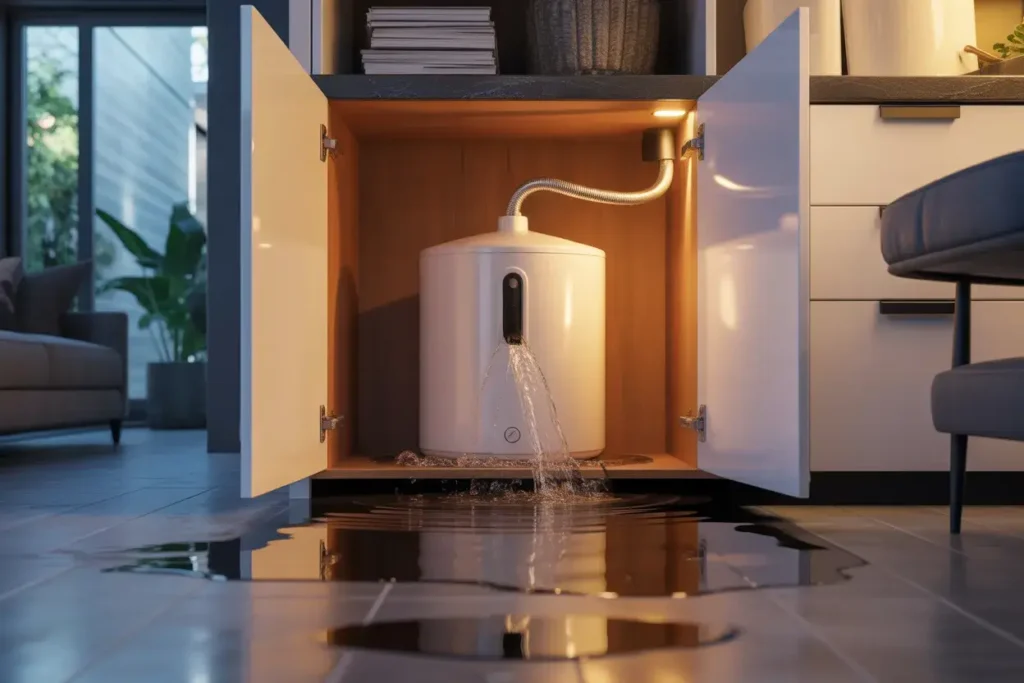
The Kapiti Coast’s hard water creates specific efficiency challenges for hot water cylinders, with mineral deposits accumulating over time and substantially reducing heating performance. This gradual deterioration often goes unnoticed until problems become severe.
Understanding Hard Water Impact
Hard water contains dissolved minerals, primarily calcium and magnesium, that precipitate when water heats. These minerals settle at cylinder bottoms as sediment whilst also coating heating elements and internal surfaces. The accumulation continues throughout cylinder service life, progressively worsening efficiency unless professionally addressed.
Sediment layers at cylinder bottoms act as insulation, preventing effective heat transfer from elements to water. As layers thicken, elements must operate longer to achieve target temperatures, consuming additional energy whilst accelerating element deterioration. Research indicates sediment layers as thin as 5mm can reduce heating efficiency by 5-10%, with severe accumulation reducing efficiency by 20% or more.
Element Performance Degradation
Heating elements coated with mineral deposits operate less efficiently whilst failing prematurely. The mineral coating insulates elements from water, forcing higher element temperatures to achieve necessary heat transfer. These elevated temperatures accelerate element oxidation and eventual failure whilst consuming additional energy throughout the degradation process.
For Paraparaumu households, element replacement often becomes necessary every 3-5 years in areas with particularly hard water, compared to 5-8+ years for cylinders operating with softer water or receiving regular professional maintenance. The energy waste from declining element efficiency throughout this degradation period adds substantial costs beyond eventual replacement expenses.
Capacity Reduction
Sediment accumulation at cylinder bottoms reduces effective water capacity. A cylinder rated for 180 litres might provide only 150-160 litres of usable hot water once sediment occupies bottom space. This reduced capacity means more frequent heating cycles or insufficient hot water for household needs, both contributing to increased energy consumption and user dissatisfaction.
Additionally, sediment prevents complete drainage during maintenance, retaining old water that promotes bacterial growth and creates odour problems affecting water quality.
Professional Descaling and Flushing
Professional cylinder maintenance includes flushing to remove sediment accumulation and descaling to address mineral deposits on internal surfaces. This service restores heating efficiency, extends element lifespan, and maintains full cylinder capacity. For Kapiti Coast properties with hard water, professional maintenance every 2-3 years proves worthwhile for maintaining optimal performance.
The cost of professional maintenance proves substantially less than the accumulated energy waste from declining efficiency over equivalent periods. Additionally, maintenance extends overall cylinder lifespan, delaying expensive replacement requirements whilst ensuring reliable performance.
Water Treatment Considerations
Properties with particularly severe hard water might benefit from whole-house water treatment systems that reduce mineral content before water reaches cylinders and other appliances. Whilst these systems represent significant initial investment, they protect all household plumbing and appliances from hard water damage whilst substantially extending equipment lifespan.
Professional plumbers can assess whether water hardness in your Paraparaumu property warrants treatment system investment based on measured mineral content and observed deterioration rates on existing installations.
Addressing hard water mineral buildup restores heating efficiency whilst extending cylinder lifespan—particularly valuable for Kapiti Coast properties where hard water represents ongoing operational challenge.
Inefficiency #4: Oversized or Undersized Cylinders
Incorrect cylinder sizing creates inefficiency through either excessive standby heat loss from oversized units or insufficient capacity causing supplementary heating from undersized installations. Professional sizing assessment ensures optimal efficiency for household requirements.
Oversized Cylinder Waste
Cylinders substantially larger than household needs waste energy through unnecessary standby heat loss. A 250-litre cylinder in a two-person household heats and maintains temperature on perhaps 100 litres of water that never gets used—wasting energy heating excess capacity whilst increasing surface area for heat loss.
The energy waste from oversizing compounds over time. A household requiring 120 litres daily but maintaining 200 litres at temperature wastes approximately 0.5-0.8 kWh daily through unnecessary standby losses—costing $0.12-$0.20 daily or $3.60-$6.00 monthly. Over the cylinder’s service life, this accumulates to hundreds of dollars in wasted energy providing no household benefit.
Undersized Cylinder Complications
Conversely, undersized cylinders create different inefficiencies. Households exceeding cylinder capacity frequently exhaust hot water supplies, triggering continuous heating attempts or forcing use of expensive supplementary heating. This leads to either inadequate hot water availability or higher energy consumption from constant heating cycles.
Additionally, insufficient capacity often leads homeowners to raise thermostat settings excessively, attempting to stretch available hot water through higher storage temperatures. This creates the temperature-related waste discussed previously whilst potentially creating scalding risks.
Household Requirement Assessment
Professional cylinder sizing considers household occupancy, hot water usage patterns, appliance requirements, and lifestyle factors. A four-person household with teenage children requires substantially larger capacity than a retired couple, whilst properties with large baths, multiple bathrooms, or high-consumption appliances need additional capacity beyond basic calculations.
For Paraparaumu households, usage patterns affect optimal sizing. Properties used as holiday homes might operate efficiently with smaller cylinders given intermittent occupancy, whilst full-time residences require sizing for sustained daily demand.
Modern Cylinder Efficiency Benefits
When replacement becomes necessary, correctly sized modern cylinders deliver significant efficiency improvements beyond mere capacity optimisation. Contemporary manufacturing standards ensure better insulation, more efficient elements, improved temperature control, and enhanced corrosion resistance—all contributing to reduced operating costs compared to older units regardless of size.
Heat Pump and Alternative System Sizing
Alternative hot water systems including heat pumps require different sizing approaches than standard electric cylinders. Heat pump systems typically feature larger storage capacity to compensate for slower recovery rates, whilst solar hot water installations require sizing that accounts for both solar contribution and backup heating requirements.
Professional assessment determines optimal system type and size for specific household needs, considering both initial costs and long-term operating expenses to identify solutions providing best overall value.
Correct cylinder sizing ensures efficient operation matched to actual household requirements, eliminating waste from both oversizing and undersizing whilst providing reliable hot water supply year-round.
Inefficiency #5: Failed or Failing Elements
Heating element deterioration creates progressive efficiency decline, with failing elements consuming increasing energy whilst delivering diminishing heat output. This gradual failure often escapes notice until complete breakdown occurs.
Element Degradation Process
Heating elements deteriorate through thermal cycling, mineral deposit accumulation, and corrosion. As elements age, resistance characteristics change, affecting heating efficiency and power consumption. Additionally, mineral coating creates insulation that forces elements to operate at higher temperatures, accelerating degradation whilst reducing heat transfer efficiency.
Elements nearing failure might consume normal or even elevated power whilst producing reduced heat output—effectively converting electricity to wasted energy rather than useful water heating. This inefficiency can persist for months before complete failure, wasting substantial energy throughout the degradation period.
Identifying Failing Elements
Professional assessment identifies elements approaching failure before complete breakdown occurs. Testing includes resistance measurement, visual inspection for damage or excessive mineral coating, and operational testing under load conditions. These assessments reveal elements requiring replacement before they fail completely during periods of high demand.
For Paraparaumu properties with hard water, element inspection proves particularly valuable as mineral accumulation accelerates deterioration. Elements showing heavy coating or degraded performance can be replaced proactively, restoring full heating efficiency whilst avoiding inconvenient failures.
Replacement Timing
Proactive element replacement based on professional assessment costs less than emergency replacement following complete failure. Scheduled replacement allows convenient appointment timing, avoids rush charges for emergency service, and prevents the inconvenience of complete hot water loss during failure periods.
Additionally, replacing elements before complete failure prevents the energy waste from months of declining performance that occurs when elements gradually deteriorate. For households using 10 kWh daily for water heating, even 10% efficiency decline from failing elements wastes 1 kWh daily—costing $0.25 daily or $7.50 monthly throughout the degradation period.
Dual Element Systems
Some larger cylinders incorporate dual elements for improved recovery rates. These systems require both elements functioning efficiently for optimal performance. Failure of one element reduces capacity whilst potentially overworking the remaining element, accelerating its deterioration whilst substantially increasing heating times.
Professional assessment of dual-element systems verifies both elements operate correctly, with replacement of failing elements restoring full system capacity and efficiency.
Maintaining properly functioning heating elements ensures efficient energy conversion throughout the cylinder’s service life, eliminating waste from declining element performance whilst providing reliable hot water supply.
Inefficiency #6: Poor Cylinder Location and Installation
Cylinder location significantly affects operational efficiency, with installations in cold, unheated spaces creating substantially higher energy consumption than interior locations. Additionally, poor installation practices create unnecessary inefficiencies throughout system operation.
Location Temperature Impact
Cylinders installed in unheated garages, outdoor cupboards, or other cold spaces lose heat faster than units in heated interior locations. The temperature differential between stored hot water and surrounding air drives heat loss rates, with every 10°C decrease in ambient temperature increasing losses by approximately 20-30%.
A cylinder in a 10°C winter garage loses heat perhaps 50% faster than an identical unit in a 20°C interior cupboard. For poorly insulated older cylinders, this location difference might add 0.5-1 kWh daily to heat loss—costing $0.12-$0.25 daily or $3.60-$7.50 monthly throughout winter months.
Pipe Run Inefficiencies
Excessive distance between cylinders and main hot water usage points creates waste through cooling in distribution pipes. Every metre of pipe run contains water that cools between uses, requiring drainage and replacement with hot water from the cylinder each time taps open. Long pipe runs can waste several litres of heated water per usage, with the wasted energy accumulating substantially over daily usage patterns.
Additionally, uninsulated pipe runs allow heat loss from stored hot water remaining in pipes between uses. Professional installation minimises distribution distances whilst ensuring adequate pipe insulation to reduce both types of waste.
Installation Quality Issues
Poor installation creates various inefficiencies including incorrect thermostat placement affecting temperature sensing, inadequate valve installations creating pressure issues, insufficient pipe insulation allowing unnecessary heat loss, and improper electrical connections affecting element performance. These installation deficiencies persist throughout cylinder service life unless professionally corrected.
For Paraparaumu properties, coastal environment exposure makes quality installation particularly important. Properly installed and protected systems resist salt air corrosion better than installations with shortcuts or substandard practices that create vulnerable points.
Relocation Considerations
For properties with poorly located cylinders, relocation might prove worthwhile if potential energy savings justify the installation costs. Moving a cylinder from an unheated garage to an interior cupboard could save $5-$10 monthly through reduced heat loss—accumulating to $60-$120 annually and potentially recovering relocation costs within 3-5 years whilst providing ongoing benefits throughout the cylinder’s remaining service life.
Professional assessment determines whether relocation provides cost-effective efficiency improvement or whether other interventions deliver better value for specific properties.
New Installation Best Practices
When installing replacement cylinders, professional plumbers consider optimal placement that minimises distribution pipe runs, provides adequate service access, maintains appropriate clearances for safety and maintenance, locates cylinders in conditioned spaces where possible, and ensures proper support for cylinder weight when filled. These considerations create installations that operate efficiently throughout equipment service life.
Optimal cylinder location and quality installation eliminate unnecessary inefficiencies, reducing ongoing operating costs whilst ensuring reliable long-term performance.
Inefficiency #7: Lack of Regular Professional Maintenance
Perhaps the most significant factor in hot water cylinder inefficiency is simple neglect—operating cylinders for years without professional maintenance that identifies developing problems and maintains optimal performance.
Cumulative Degradation
Hot water cylinders don’t fail suddenly without warning. Instead, they deteriorate gradually through mineral accumulation, element degradation, thermostat drift, valve deterioration, and insulation compression. Each individual problem might create modest efficiency decline, but combined effects substantially increase energy consumption whilst reducing system reliability.
A cylinder operating without maintenance for 8-10 years might experience 15-25% efficiency decline compared to new condition—wasting 1.5-2.5 kWh daily through combined inefficiencies. At 25 cents per kWh, this waste costs $0.37-$0.62 daily or $11-$19 monthly—accumulating to $130-$230 annually in preventable energy costs.
Professional Maintenance Benefits
Regular professional maintenance addresses developing problems before they become severe. Comprehensive service includes sediment flushing to remove mineral accumulation, element inspection and testing for performance verification, thermostat calibration ensuring accurate temperature control, valve testing confirming safety system operation, insulation assessment identifying deterioration, and overall system evaluation checking for leaks, corrosion, or structural issues.
This maintenance restores performance whilst extending equipment lifespan. Professional service every 2-3 years typically costs $150-$250 depending on work required, whilst preventing energy waste exceeding this cost and delaying expensive cylinder replacement.
Warranty and Insurance Considerations
Many cylinder warranties require evidence of regular professional maintenance, with claims rejected for failures attributable to neglect. Additionally, insurance policies might question coverage for damage resulting from poorly maintained equipment. Professional maintenance provides documentation demonstrating responsible ownership whilst protecting warranty and insurance coverage.
Early Problem Detection
Professional maintenance identifies developing problems at early stages when correction remains straightforward and inexpensive. A small leak detected during routine service might require simple washer replacement costing $50, whilst the same leak ignored until it causes significant water damage might create repair costs exceeding thousands of dollars.
Similarly, elements showing early deterioration can be replaced during scheduled maintenance for $150-$200, whilst emergency replacement following complete failure during a winter weekend might cost $300-$400 including callout and urgent service charges.
Paraparaumu Environmental Factors
The Kapiti Coast’s salt air and hard water make regular professional maintenance particularly valuable. These environmental factors accelerate deterioration compared to inland or soft-water areas, with maintenance intervals that might prove adequate elsewhere being insufficient for coastal properties. Professional plumbers familiar with local conditions recommend appropriate maintenance schedules for Paraparaumu circumstances.
Investing in regular professional maintenance proves substantially less expensive than the combined costs of energy waste, premature equipment failure, and emergency repairs that result from neglect.
Modern Alternatives: Heat Pump Hot Water Systems
For Paraparaumu households considering hot water system upgrades, heat pump technology offers substantial efficiency improvements over standard electric cylinders, potentially reducing water heating energy consumption by 60-75%.
Heat Pump Operating Principle
Heat pump hot water systems extract heat from surrounding air and transfer it to water storage, using refrigeration cycles similar to reverse-cycle air conditioners. This process requires far less electrical energy than direct resistance heating, with modern heat pumps achieving efficiency ratings of 3-4 times standard electric elements.
In practical terms, a heat pump might use 2.5 kWh of electrical energy to transfer 10 kWh of heat into stored water—achieving 400% efficiency compared to 100% for standard resistance elements. This dramatic efficiency advantage translates directly to reduced operating costs.
Cost-Benefit Analysis
Heat pump hot water systems cost substantially more than standard electric cylinders initially—typically $3,500-$5,500 installed compared to $1,500-$2,500 for standard cylinders. However, reduced operating costs recover this premium over system service life.
A household using 12 kWh daily for water heating with a standard cylinder might reduce consumption to 3-4 kWh daily with a heat pump system—saving 8-9 kWh daily or $2-$2.25 at 25 cents per kWh. Monthly savings of $60-$67.50 accumulate to $720-$810 annually, potentially recovering the initial cost premium within 3-5 years whilst providing ongoing savings throughout the system’s 10-15 year service life.
Performance in Coastal Climate
The Kapiti Coast’s moderate climate proves ideal for heat pump operation. These systems operate most efficiently in ambient temperatures above 10°C, with Paraparaumu’s mild winters rarely creating conditions that significantly reduce heat pump performance. Coastal areas maintain more moderate temperatures year-round compared to inland regions, maximising heat pump efficiency.
Installation Considerations
Heat pump systems require adequate outdoor space for the compressor unit, appropriate acoustic considerations for neighbours given compressor noise during operation, and suitable electrical supply. Professional assessment determines whether specific properties accommodate heat pump installation whilst identifying optimal placement for efficiency and convenience.
Government Incentives and Support
Periodically, government programmes provide support for energy-efficient hot water system installations including heat pumps. Homeowners should investigate current programmes that might reduce effective purchase costs through rebates, financing assistance, or other incentives. Duke’s Plumbing stays informed about available programmes, advising customers on applicable benefits.
Suitability Assessment
Heat pump systems suit most Paraparaumu households, but professional assessment identifies specific property characteristics affecting suitability. Households with high hot water demands might require larger storage capacity to compensate for heat pumps’ slower recovery rates compared to high-wattage electric elements. Properties with space constraints might face installation challenges requiring alternative solutions.
For households seeking maximum efficiency and willing to invest in long-term operating cost reduction, heat pump hot water systems represent excellent alternatives to standard electric cylinders.
Why Choose Duke’s Plumbing for Hot Water Cylinder Assessment
Duke’s Plumbing provides comprehensive hot water cylinder assessment and services throughout Paraparaumu and the broader Kapiti Coast, combining professional expertise with commitment to delivering genuine value for homeowners.
Professional Cylinder Assessment
Our licensed plumbers conduct thorough hot water cylinder assessments identifying specific inefficiencies affecting your system. This includes insulation evaluation determining heat loss rates, temperature verification ensuring optimal settings, element testing assessing performance and deterioration, sediment evaluation measuring hard water impact, capacity analysis confirming appropriate sizing, and overall system inspection checking for developing problems.
Following assessment, we provide clear recommendations prioritised by cost-effectiveness, distinguishing between critical issues requiring immediate attention and efficiency improvements delivering longer-term value. This approach helps homeowners make informed decisions about maintenance, upgrades, or replacement based on actual system condition rather than generalisations.
Kapiti Coast Expertise
Operating throughout the Kapiti Coast since 2016, Duke’s Plumbing understands environmental factors affecting local hot water systems. We recognise hard water patterns throughout the region, anticipate salt air corrosion issues affecting coastal installations, understand local housing types and typical cylinder installations, and recommend maintenance intervals appropriate for Kapiti conditions rather than generic schedules.
This local knowledge ensures assessments address region-specific challenges whilst solutions account for environmental factors affecting long-term performance and durability.
Comprehensive Service Capability
Duke’s Plumbing handles all aspects of hot water cylinder service including routine maintenance and flushing, element replacement and upgrading, thermostat adjustment and replacement, insulation upgrades including cylinder wraps, tempering valve installation, complete cylinder replacement when necessary, and heat pump hot water system installation. This comprehensive capability means you work with a single trusted provider for all hot water requirements.
Honest Advice and Recommendations
We provide straightforward advice about whether cylinder repair, maintenance, or replacement proves most cost-effective for specific situations. Not every older cylinder requires immediate replacement—sometimes professional maintenance and targeted improvements extend service life economically. Conversely, investing in repairs for cylinders approaching end of service life might prove wasteful compared to replacement with efficient modern equipment.
Duke’s Plumbing prioritises long-term customer relationships over short-term sales, providing honest recommendations that serve homeowners’ genuine interests rather than maximising immediate transaction values.
Quality Products and Installation
When replacement becomes appropriate, we supply quality cylinders and heat pump systems from reputable manufacturers, installed to professional standards that ensure optimal performance and longevity. Proper installation proves critical for efficiency, safety, and durability—cheap installation shortcuts create ongoing problems whilst negating any initial cost savings.
Convenient Paraparaumu Service
Serving Paraparaumu and surrounding Kapiti Coast communities, Duke’s Plumbing provides convenient scheduling, efficient service delivery, and responsive communication throughout the assessment and service process. We respect your time and property, maintaining clean work areas and ensuring you understand all work performed.

Take Control of Your Hot Water Costs Today
Stop accepting $40+ monthly waste from inefficient hot water cylinder operation. Professional assessment identifies specific inefficiencies affecting your Paraparaumu property whilst recommending cost-effective solutions that reduce energy consumption, lower power bills, and improve system performance.
Whether your cylinder requires simple maintenance, targeted efficiency improvements, or complete replacement, Duke’s Plumbing provides expert assessment and professional service that addresses your specific situation. From cylinder wrap installation to heat pump system replacement, we deliver solutions that serve your long-term interests whilst eliminating unnecessary energy waste.
The money currently disappearing through hot water cylinder inefficiency could fund better purposes—family activities, home improvements, or savings for future needs. Taking action now prevents ongoing waste whilst potentially qualifying for government efficiency incentives available for qualifying upgrades.
Contact Duke’s Plumbing today to schedule professional hot water cylinder assessment. Our licensed plumbers will evaluate your system, identify inefficiencies, and recommend practical solutions that reduce energy costs whilst ensuring reliable hot water supply for your Paraparaumu home.
Call Luke at Duke’s Plumbing on 022 543 8789 or email admin@dukesplumbingltd.co.nz to book your hot water cylinder assessment. Stop wasting money on preventable energy consumption—invest in professional evaluation that protects your household budget whilst improving system performance.
Frequently Asked Questions
How can I tell if my hot water cylinder is wasting energy?
Several indicators suggest cylinder inefficiency. Higher than expected power bills with unchanged usage patterns often indicate declining efficiency. Running out of hot water more frequently than previously suggests reduced capacity from sediment buildup or element problems. Lukewarm water despite adequate recovery time indicates element deterioration or incorrect thermostat settings. Visible corrosion, leaking, or mineral deposits around the cylinder signal developing problems. Additionally, cylinders manufactured before 2002 almost certainly operate less efficiently than modern units regardless of apparent condition. Professional assessment provides definitive evaluation, measuring actual performance against efficiency standards whilst identifying specific problems affecting your cylinder. This assessment costs substantially less than ongoing energy waste from undiagnosed inefficiencies, making professional evaluation worthwhile for any cylinder over 5-7 years old or showing performance changes.
Is it worth upgrading my old cylinder to a heat pump system?
Heat pump systems deliver substantial long-term savings for most Paraparaumu households, though suitability depends on specific circumstances. Households with high hot water consumption achieve fastest payback on heat pump investment, potentially recovering the cost premium within 3-4 years. Properties with adequate outdoor space for compressor units and suitable electrical supply accommodate heat pump installation most easily. Homeowners planning long-term property occupancy benefit most from investments that deliver ongoing savings over extended periods. The Kapiti Coast’s moderate climate optimises heat pump efficiency compared to regions with harsh winters affecting performance. Professional assessment determines whether heat pump investment provides good value for your specific property and usage patterns. For households replacing failing cylinders that would require significant investment regardless, the incremental cost of upgrading to heat pump systems often proves worthwhile given long-term operating savings. Government incentive programmes when available further improve heat pump cost-effectiveness, potentially reducing effective purchase costs whilst accelerating payback periods.
How often should I have my hot water cylinder professionally serviced?
For Kapiti Coast properties with hard water and salt air exposure, professional cylinder maintenance every 2-3 years maintains optimal efficiency and extends equipment lifespan. Properties with particularly hard water might benefit from more frequent service, whilst those with excellent water quality might extend intervals slightly. Cylinders showing performance changes including reduced hot water availability, longer recovery times, unusual noises during heating, visible corrosion or leaking, or age exceeding 7-8 years without previous professional maintenance warrant immediate assessment regardless of scheduled intervals. Professional maintenance proves substantially less expensive than energy waste from declining efficiency or costs associated with premature failure from neglect. The modest service cost typically recovers through efficiency improvements within the first year following maintenance, with ongoing benefits continuing until the next service interval. Additionally, maintenance documentation protects warranty coverage and demonstrates responsible ownership that may prove valuable for insurance purposes or property sale. Duke’s Plumbing recommends 2-3 year maintenance intervals for most Paraparaumu properties, with specific recommendations based on water quality testing and system assessment.
Can I just wrap my old cylinder with insulation instead of replacing it?
Cylinder wrap installation provides cost-effective efficiency improvement for older units with inadequate insulation, typically costing $40-$80 for materials and professional installation. This upgrade can reduce heat loss by 20-40% depending on existing insulation quality, potentially saving $30-$90 annually in reduced energy costs. However, wraps address only one inefficiency source—they don’t improve failing elements, correct thermostat drift, remove sediment buildup, or address structural deterioration. For cylinders in good overall condition with primarily insulation deficiencies, wraps prove worthwhile. For units with multiple problems or approaching end of service life, investing in wraps might prove wasteful if replacement becomes necessary soon regardless. Professional assessment determines whether wrap installation provides good value for your specific cylinder or whether other interventions including complete replacement deliver better long-term results. Generally, cylinders under 10 years old in sound condition benefit most from wrap upgrades, whilst older units with multiple inefficiencies warrant replacement consideration. Duke’s Plumbing provides honest advice about whether incremental improvements or replacement serves your interests better based on comprehensive cylinder evaluation.
What size hot water cylinder does my Paraparaumu home need?
Cylinder sizing depends on household occupancy, hot water usage patterns, appliance requirements, and lifestyle factors. Basic guidance suggests 50 litres per person for standard usage, with adjustments for specific circumstances. A four-person household typically requires 180-250 litre capacity depending on usage patterns. Households with large baths, multiple bathrooms, or high-efficiency showerheads might need capacity adjustments. Teenage children typically consume more hot water than younger children or adults. Properties used as holiday homes with intermittent occupancy might operate efficiently with smaller capacity than permanent residences. Heat pump systems often feature larger storage to compensate for slower recovery rates compared to high-wattage electric elements. Professional assessment considers your specific usage patterns, existing consumption data if available, future household changes, and appliance requirements to recommend optimal sizing. Incorrectly sized cylinders—either oversized wasting energy through unnecessary standby losses or undersized creating inadequate supply—compromise both efficiency and user satisfaction. Duke’s Plumbing evaluates your specific requirements, recommending appropriate capacity that balances efficiency with reliable hot water availability for your Paraparaumu household’s needs.
Source Links
- Consumer New Zealand Hot Water Systems Guide – https://www.consumer.org.nz/articles/hot-water
- Energy Efficiency and Conservation Authority (EECA) – https://www.eeca.govt.nz/
- BRANZ Hot Water Research – https://www.branz.co.nz/
- Standards New Zealand Plumbing Standards – https://www.standards.govt.nz/
- Electricity Authority New Zealand – https://www.ea.govt.nz/
- Gen Less Energy Efficiency – https://genless.govt.nz/
- Ministry of Business, Innovation and Employment (MBIE) – https://www.mbie.govt.nz/
- WorkSafe New Zealand Plumbing – https://www.worksafe.govt.nz/topic-and-industry/plumbing-gasfitting-and-drainlaying/
- Plumbers, Gasfitters, and Drainlayers Board – https://www.pgdb.co.nz/
- Building Performance Energy Standards – https://www.building.govt.nz/
Duke’s Plumbing Ltd provides professional hot water cylinder services throughout Paraparaumu and Kapiti Coast. Our licensed plumbers deliver expert assessment, maintenance, and installation services that reduce energy costs whilst ensuring reliable hot water supply. Quality Plumbing, Friendly Service since 2016.